

.png)
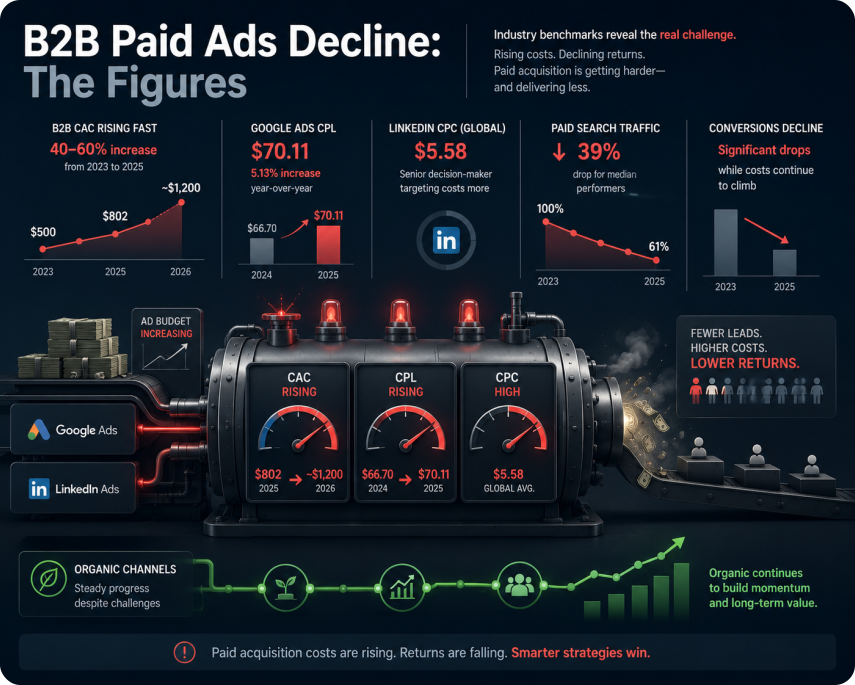
Rising CAC, extensive ad fatigue, and shifting buyer behaviors have made traditional paid channels less effective and more expensive than ever. In 2026, Google Ads, LinkedIn Sponsored Content, and display campaigns are showing dwindling returns, longer RoI periods, and lower-quality leads.
Source : Link
Rising CAC affects competitive industries like fintech (up to $1,450 average, with enterprise deals far higher) and mid-market/enterprise SaaS ($1,200–$2,000+ per customer) the most. LTV:CAC ratios are floundering too, with many companies seeing payback periods stretch to 12–18 months or longer. A healthy standard remains 3:1 to 5:1, but rising acquisition costs wear down this margin quickly.
Ad fatigue has become a prime concern in B2B. Consumers are getting tired of relentless digital advertising across LinkedIn feeds, search results, and retargeting campaigns. According to studies 91% of people feel ads have become more pervasive than in the past, with 64% citing social media as the top source of fatigue, followed by display (49%) and paid search (31%).
Click-through Rates (CTR) for LinkedIn sponsored content are around 0.44%–0.65%, while banner ad CTRs have reduced to nearly 0.05% in some formats. Broadcast frequency worsens the figures - 49% of consumers report deciding against purchases after seeing the same ad too often. In B2B, where decisions involve multiple stakeholders and long cycles, this fatigue leads to lower engagement, poorer lead quality, and higher churn when compared to organic reach.
Privacy regulations, AI-driven search changes (such as Google’s AI Overviews reducing clicks by 61–68% in affected queries), and algorithm shifts have made precise targeting harder and costs higher. Paid leads often convert at lower rates, but eventually taper off, thus accelerating the b2b paid ads failure.
Since regular paid ads struggle to evoke genuine trust, B2B buyers prefer unbiased third-party content, peer insights, and academic resources over vendor-sponsored messages. Paid campaigns often seem insistent, damaging brand image in an environment where more and more buyers trust independent content more than direct vendor claims.
In such a scenario, higher spend to fight declining performances leads to even more ad fatigue and a beaten advocacy. Events and communities are seeing renewed interest (many organizations increasing in-person event budgets), but many paid-dependent strategies fail to build the long-term relationships needed for complex sales cycles.
Stats favor an adjusted approach. Organic channels often deliver lower Customer Acquisition Cost.
%201.svg)
Source : Link
Here are proven alternatives:
Companies shifting budget toward organic and relationship-driven tactics observe more predictable pipelines and better unit economics. While paid ads still have a role, especially for short-term testing or high-intent search, they should act only as a support to drive sales.
Structural changes have caused the decline of B2B Paid Ads in 2026. With CAC rising due to competition and platform economics, widespread ad fatigue, and advocacy distrusts in an easy-to-fabricate environment, marketeers following to 2020s guidelines risk unsustainable growth and drained budgets.
Those who approach marketing as a long-term asset-building exercise are the ones to succeed in the future. Emphasizing owned media, real content, and human-centric experiences will lead to earning attention and garnering a positive brand perception for the long-term, instead of just renting it for a fleeting time.
Want to have a business breakthrough through your most authentic marketing channel? Click for a demo now.
.png)


Insights around Employee-led Distribution + Growth every 2 weeks
.svg)
The modern employee advocacy platform. Turn your team into your most trusted marketing channel.